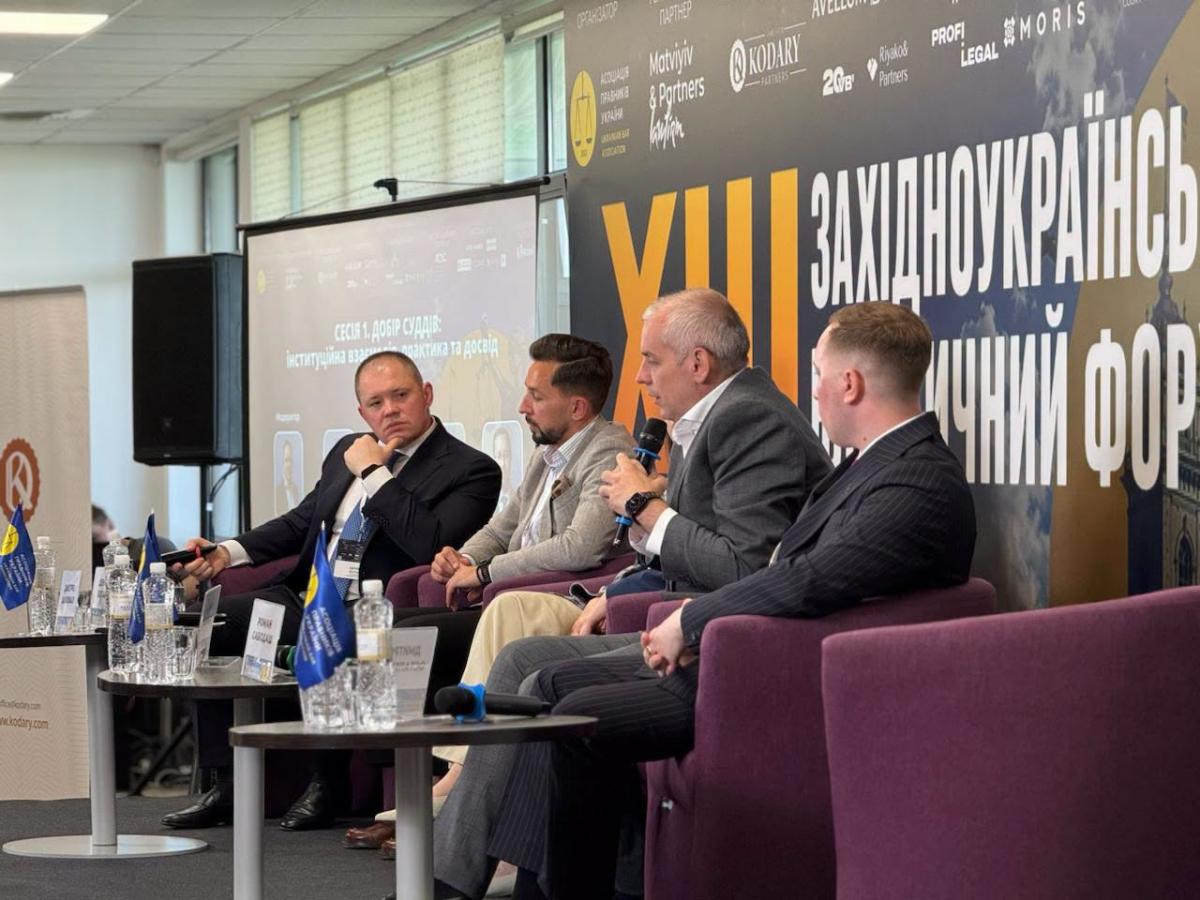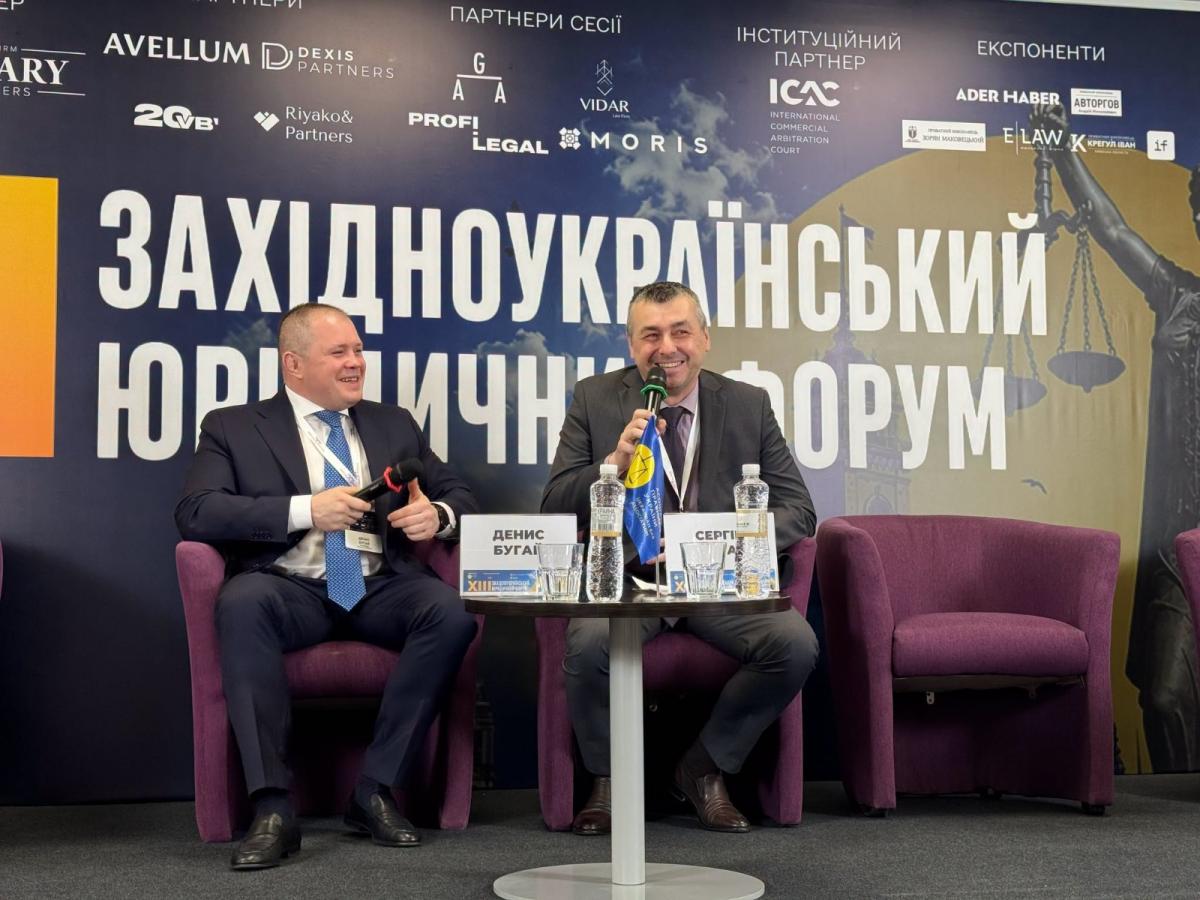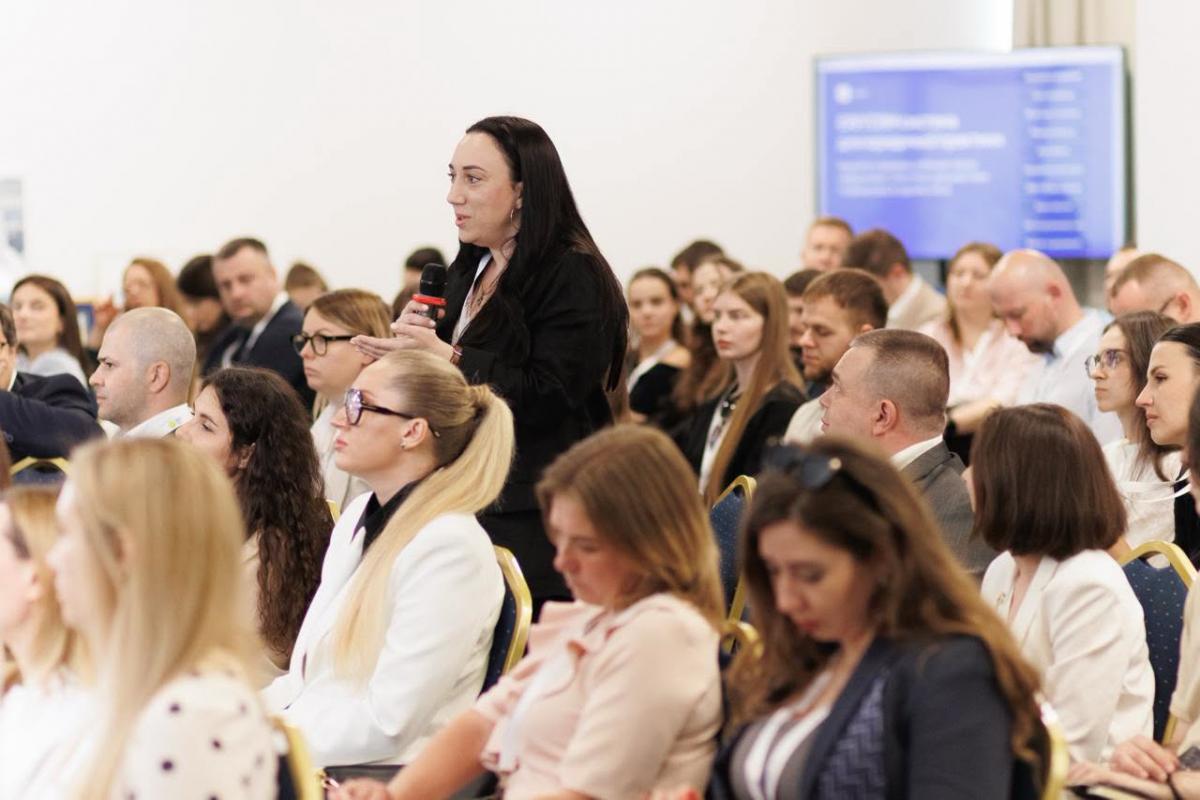

On June 18, 2026, Commission members Serhii Chumak and Roman Sabodash attended the XIII Western Ukrainian Legal Forum in Lviv, organised by the Ukrainian Bar Association. The annual forum brings together members of the legal community to discuss current challenges, identify common solutions and strengthen professional cooperation.
The forum opened with a special interview featuring Serhii Chumak, a member of the High Qualification Commission of Judges of Ukraine (HQCJU). During the discussion, he outlined the Commission’s key achievements and current priorities. He noted that, alongside ongoing judicial selection procedures for local courts, one of the HQCJU’s principal priorities has become strengthening the staffing capacity of the courts of appeal.
A member of the Commission reported that a number of appointment procedures to fill judicial vacancies in the courts of appeal had already been completed, including in the Sumy, Zaporizhzhia, Zhytomyr, Transcarpathian, Mykolaiv, Chernihiv and Odesa regions. He also stated that work was continuing to fill vacancies in Ukraine’s largest courts of appeal. The competitions for the Dnipro, Lviv and Kharkiv Courts of Appeal are expected to be completed in the near future, significantly reinforcing their judicial capacity.
Addressing the shortage of judicial personnel, with 2,488 judicial vacancies currently remaining, a member of the Commission stressed the importance of completing the ongoing judicial selection procedures and emphasised that the results of the qualification exam play a decisive role in determining a candidate’s ranking. He also noted that the Commission would shortly complete the review of practical assignments submitted by candidates participating in the selection process for vacant positions of judges in the local general courts and in the competition for the Specialised Administrative Court of Appeal, after which the corresponding qualification exams results would be approved.
The interview also covered the digitalisation of the HQCJU’s activities and the use of artificial intelligence (AI) technologies. Serhii Chumak observed that AI could substantially assist the Commission in processing large volumes of information relating to candidates for the position of a judge far more quickly than could be achieved manually. At the same time, he emphasised that such technologies should serve as analytical support tools and are unlikely, at least for the time being, to replace human judgement during interviews with individual candidates.
Continuing the discussion on judicial selection and the practical aspects of competitive procedures, Roman Sabodash, a member of the Commission participated in the first panel session entitled “Judicial Selection: Institutional Cooperation, Practice and Candidates’ Experience”. He provided an update on the current staffing figures for the judicial system. As of June 2026, there remained 51 vacancies in the Supreme Court, 438 in the courts of appeal and 1,919 in the local courts. A member of the Commission also noted that the judicial selection competitions had attracted significantly more applicants than originally anticipated, with 9,339 candidates applying for positions in the local courts and 2,076 candidates for positions in the courts of appeal.
Roman Sabodash further emphasised the importance of providing comprehensive information and guidance to participants throughout the competitive selection process. He stressed that clear explanations, timely communication and effective engagement with candidates are essential to ensuring an efficient and transparent judicial selection process. He also commended the work of the Commission Secretariat, which, during large-scale competitions, provides comprehensive organisational and advisory support to candidates, including clarification of procedural matters and assistance throughout all stages of the application and competition process.
The forum featured lively discussions on current issues affecting the functioning of the judiciary and judicial selection procedures. Participants exchanged practical approaches, put forward a range of proposals and reaffirmed the importance of maintaining a structured professional dialogue between representatives of the judiciary and the legal community as an essential element of the continued development of Ukraine’s judicial system.
Photo source: Ukrainian Bar Association